
130 W 37th St. NYC | 212-294-5974 | admin@vps.nyc
Signage and Compliance

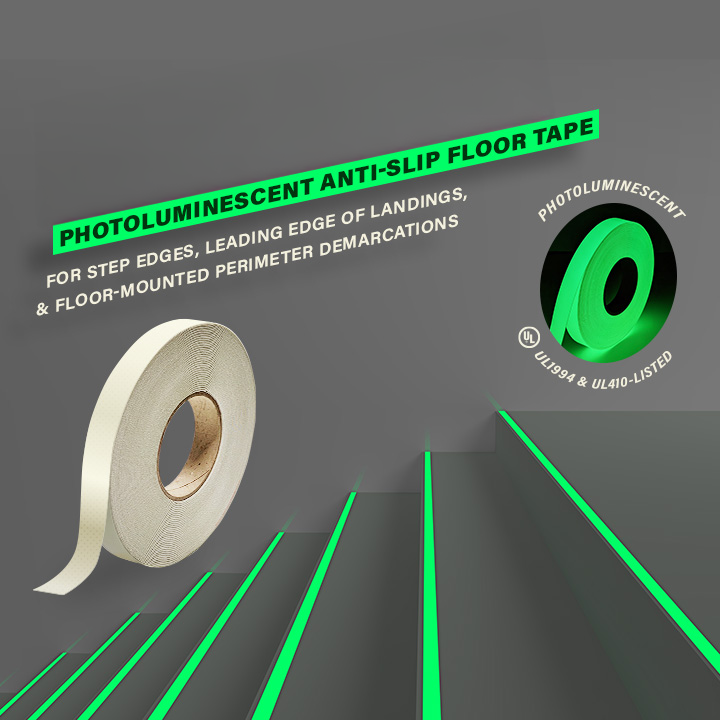
Improve safety and reduce slip hazards with high-traction anti-slip tape designed for stairs, ramps, and high-traffic areas. Ideal for commercial, industrial, and residential applications, this durable tape helps meet OSHA safety standards and enhances surface grip in both indoor and outdoor environments.
UL 1994 Listed UL 410 Listed Photoluminescent Roll of Tape; ONLY suitable for indoor use on smooth, straight floor surfaces.
Dimensions: 1" x 79ft
Materials: Textured Laminate Self-Adhesive Tape
What This is For: Anti-slip tape is used to increase traction on walking surfaces and reduce the risk of slips, trips, and falls.
It is commonly applied to:
- Stair treads and nosings
- Ramps and sloped surfaces
- Entryways and exits
- Industrial work zones
- Areas exposed to moisture, grease, or heavy foot traffic
This product is essential for maintaining safe circulation paths in buildings, construction sites, and facilities where surface conditions may become hazardous.
Legal Requirement Explained: While anti-slip tape is not always mandated as a specific standalone product, its use supports compliance with OSHA regulations (29 CFR 1910 & 1926) and NYC Building Code safety provisions, which require that walking-working surfaces be maintained in a safe condition and free from recognized slip hazards.
Property owners, employers, and contractors are responsible for ensuring that surfaces such as stairs, ramps, and work areas provide adequate slip resistance, particularly in environments where moisture, wear, or materials may create unsafe conditions. Anti-slip tape is a widely accepted and effective solution to help meet these safety obligations.
Disclaimer: This information is provided for general guidance only and does not constitute legal advice. Specific code requirements may vary based on building type, occupancy, and jurisdiction. Always consult applicable local codes, OSHA regulations, and a licensed professional or authority having jurisdiction (AHJ) to confirm compliance.
All
All
All
All


