
130 W 37th St. NYC | 212-294-5974 | admin@vps.nyc
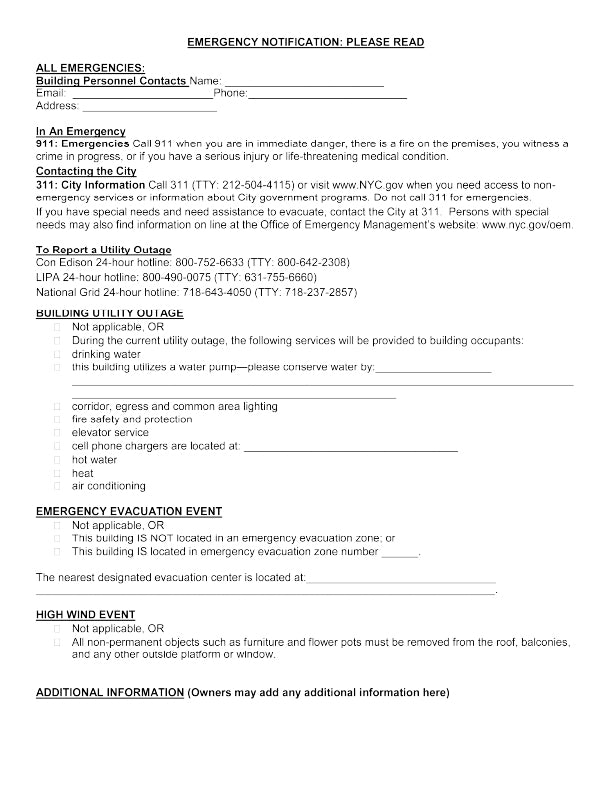
Ensure occupants know what to do during an emergency with a compliant Emergency Notification Sign. Designed for commercial, residential, and public buildings, this sign helps communicate emergency procedures, evacuation instructions, and critical safety information while supporting compliance with applicable building and fire safety regulations.
What This Sign is For: An Emergency Notification Sign provides occupants, visitors, and emergency responders with critical information during emergencies such as fires, power outages, hazardous material incidents, severe weather, or other building emergencies. Depending on the building and jurisdiction, the sign may include evacuation procedures, emergency contact information, shelter-in-place instructions, or other life safety information intended to facilitate a safe and orderly response.
Legal Requirement Explained: While no single code universally mandates one standardized "Emergency Notification Sign," many commercial, residential, educational, healthcare, industrial, and public buildings are required by applicable building codes, fire codes, OSHA regulations, or local authorities having jurisdiction (AHJs) to post emergency procedures or emergency communication notices.
These signs help ensure occupants receive clear instructions during emergencies, support emergency preparedness plans, and improve coordination with first responders. Specific content and posting requirements vary depending on occupancy type, building use, and local regulations.
Who is Required to Post This Sign:
- Commercial office buildings
- Multifamily residential buildings
- Educational facilities
- Healthcare facilities
- Industrial and manufacturing facilities
- Warehouses and distribution centers
- Hotels and hospitality properties
- Government buildings
- Assembly occupancies
- Any facility required to maintain an emergency action or evacuation plan
Building owners, property managers, employers, and facility operators are typically responsible for ensuring required emergency information is properly posted.
Where We Recommend This Sign Be Posted:
Emergency Notification Signs should be installed in locations where occupants can easily view them before or during an emergency, including:
- Building entrances or main lobbies
- Elevator lobbies
- Near primary exits
- Common corridors
- Employee break rooms
- Reception areas
- Security desks
- Near emergency information boards
- Other locations designated by the building's emergency action plan or local code requirements
The sign should remain clearly visible and accessible at all times.
Unacceptable Locations to Post This Sign:
- Behind doors that conceal the sign when opened or closed
- Behind furniture, shelving, or stored materials
- Inside locked rooms with limited occupant access
- In areas with inadequate lighting or poor visibility
- Above suspended ceilings or other inaccessible locations
- Where advertisements, decorations, or other signage obstruct readability
- In locations where the sign cannot be easily seen by building occupants during normal building use
Recommended Height / Installation Requirements:
- Install the sign at approximately 48–60 inches above the finished floor to the center of the sign for comfortable viewing.
- Mount the sign securely to a permanent wall or other approved surface.
- Ensure the sign remains clearly visible from normal occupant pathways.
- Do not obstruct the sign with furniture, equipment, or decorations.
- Use durable materials suitable for the installation environment.
- Replace the sign promptly if it becomes damaged, faded, or illegible.
- If required by applicable accessibility regulations, install signage in accordance with ADA standards for mounting height, visual contrast, and tactile features where applicable.
Disclaimer: This information is provided for general educational purposes only and should not be considered legal or code compliance advice. Signage requirements vary by jurisdiction, occupancy classification, and applicable building and fire codes. Always consult your local Authority Having Jurisdiction (AHJ), applicable building and fire codes, or a qualified code professional to verify the specific requirements for your property.
All
All
All
All


